The Guide

The Filipino Digital Nomad: How to Build a Location-Free Life from the Philippines

From Baguio to Bali. From Cagayan to Cambodia. This is everything I know about building a career with no fixed address. I work for firms in London and Dubai from a small town in Rizal, so this comes from doing it, not from reading about it on someone else's blog.

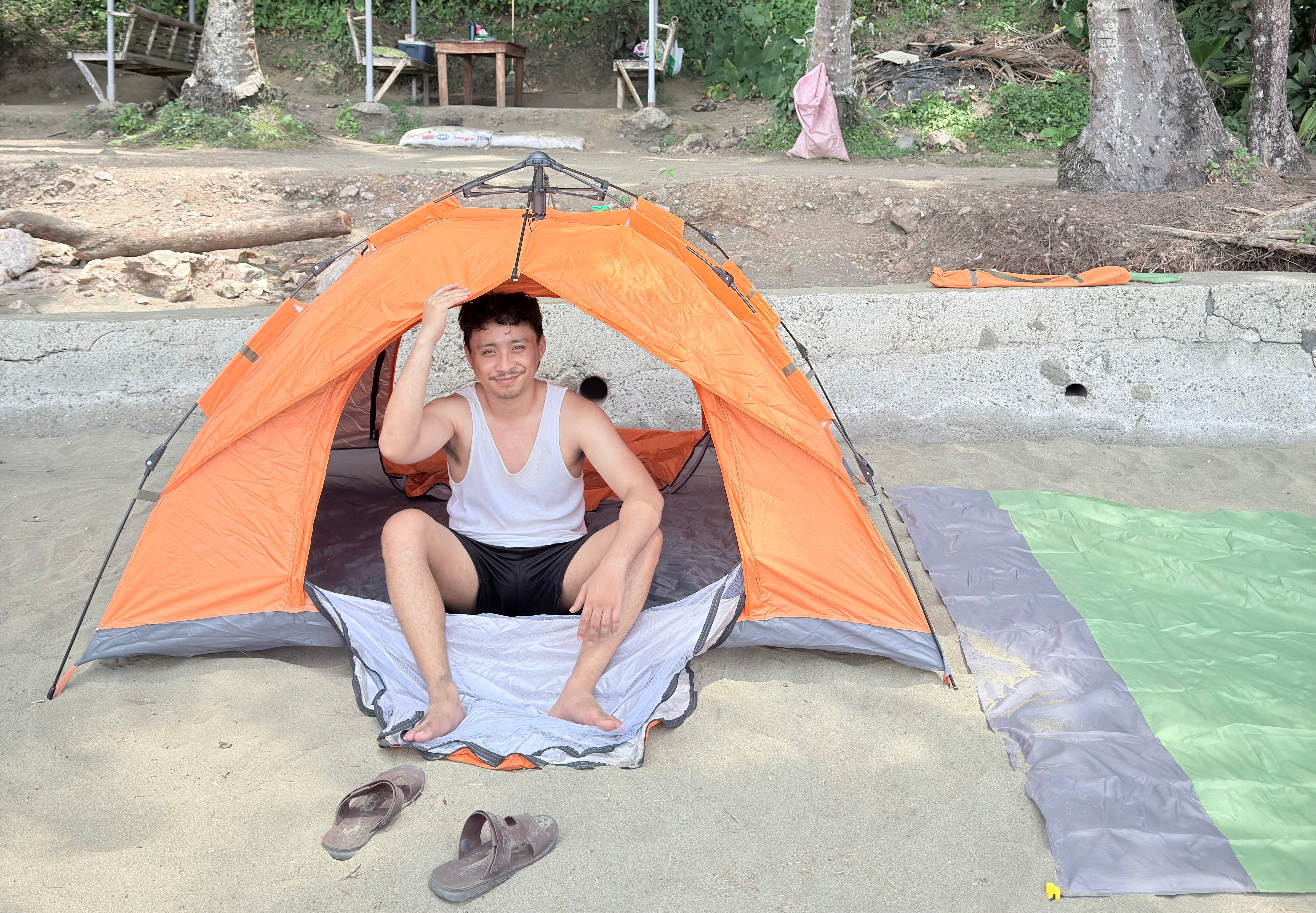
Markley Dylen Albano hiking on a mountain trail, Filipino digital nomad
Filipino Nomad
Rizal to London & Dubai,
no office required
10+
Countries Explored
8+
Years in Digital
$0
Startup Capital Needed
1
Passport. Still Managed.
What It Means to Be a Filipino Nomad

This isn't just about working from a beach. It's about rewriting the rules from scratch.

Being a Filipino digital nomad means moving through a world that wasn't really built for us. A passport that needs a visa for most places. A peso that keeps losing ground to the dollar. A culture that sees living abroad as success, but only if you're sending money home.

Most digital nomad content online is written by Westerners who can buy a flight to Lisbon and start working the next day. Our version looks different. We have to earn the right to roam, and then figure out the taxes, the visa rules, the loneliness, and the guilt.

This guide is everything I wish existed when I started. No fluff. No recycled "follow your passion" advice. Just the honest, practical, human side of building a location-free career from the Philippines.
Remote Work Filipino Freelancer Travel Slow Living Honest Advice
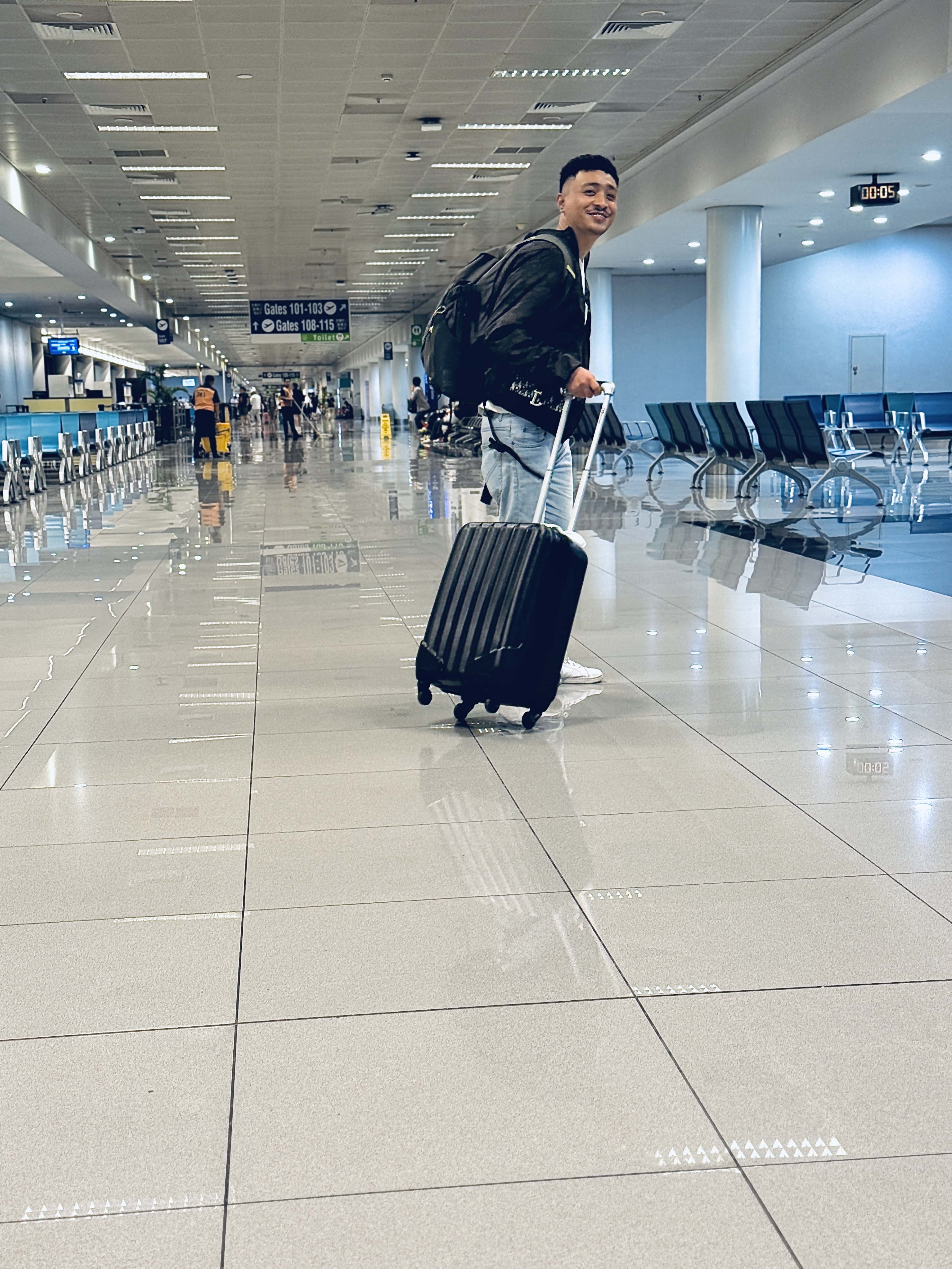
Dylan at the airport smiling with luggage, on the move as a digital nomad
PH to the World
Built from the Philippines
Step 1 of the Guide

Getting Started: The Honest First Steps

Nobody starts with a perfect setup. You start with a skill, a laptop, and enough courage to try. Here's what the beginning actually looks like.

01
Choose a skill the world will pay for in USD
Content writing, SEO, design, web development, copywriting, virtual assistance, video editing. Pick one and learn it deeply. The internet pays well for real expertise.
02
Build the simplest portfolio possible
A clean LinkedIn, three to five sample projects, and one page about yourself. You don't need a fancy website. You need to make it easy for clients to trust you before they meet you.
03
Get your first client before you leave
Don't quit your job first. Don't book the flight first. Land paying work while you still have a safety net. The nomad life is far less stressful when income is already coming in.
04
Open a Wise account for receiving USD
Wise lets you receive foreign currency at low fees. Pair it with a local dollar savings account at BDO or BPI. This is how you stop losing money on every transfer.
05
Save three months of expenses first
Things will go wrong: lost clients, visa delays, slow internet. Three months of savings is the difference between a bump in the road and a crisis that sends you home.
Dylan walking through an airport terminal
Step 2 of the Guide

Taxes & Legal for Filipino Freelancers

Nobody talks about this enough, and honestly, most Filipino freelancers who are just starting out aren't registered yet. Here's what the BIR requires, so you know what you're dealing with when you're ready to sort it out.

BIR Registration as Self-Employed
If you're a Philippine resident, the BIR expects you to register as a self-employed individual or professional. You get a Certificate of Registration (COR) with your assigned tax types. The old ₱500 annual registration fee is gone: the BIR stopped collecting it on January 22, 2024, under the Ease of Paying Taxes Act.
Worldwide Income for Residents
Philippine resident citizens are taxed on worldwide income, and that includes foreign clients. Non-residents are taxed only on income from Philippine sources. Your tax situation depends on your residency status, not on where your clients are.
Invoice in USD, Receive via Wise
Issue invoices in USD for foreign clients and receive payments through Wise to keep conversion fees low. Keep records of every transaction. They're useful proof of income once you formalize things with the BIR.
8% Flat Tax Option (Under ₱3M a Year)
If you're registered, not VAT-registered, and earn under ₱3M a year, you can elect the 8% flat income tax on gross receipts above ₱250,000 instead of the graduated rates. It's simpler to compute, and it's what many registered Filipino freelancers choose.
Foreign Clients & VAT Zero-Rating
Services rendered to non-resident foreign clients and paid in foreign currency are generally zero-rated for VAT, meaning 0% VAT instead of 12%. VAT registration is only required once gross receipts pass ₱3M a year. Below that, percentage tax or the 8% option applies. Tax rules change regularly, so check with a CPA before acting on anything here.
This is not tax or legal advice. It's a general overview for educational purposes. I'm not a CPA and I'm not a lawyer. Tax rules change and everyone's situation is different, so please talk to a Filipino CPA who understands online freelancing income before making any tax decisions.
Quick Reference
Income tax rate (individual)0–35%
VAT threshold₱3M a year
8% flat tax optionIf under ₱3M
Annual registration fee₱0 since 2024
Filing frequencyQuarterly + annual
Best tool to receive USDWise
Dylan wearing a Fly Philippines shirt at a crystal lagoon
Step 3 of the Guide

Finding Foreign Clients as a Filipino

The good news: being Filipino is an advantage in the global market. We write fluent English, we're reliable, and we show up. The hard part is knowing where to find the right clients and how to price yourself.

Where to Find Clients

OnlineJobs.ph
Built for Filipino workers and foreign employers. Less competitive than Upwork and easier for landing your first long-term role.
LinkedIn
Underused by Filipino freelancers. Optimize your profile, post about your work, and reach out directly. It works best for higher-paying clients.
Upwork
Competitive, but still worth it once you have a track record. Win with a niche profile and specific proposals, not with the lowest price.
Referrals
The best clients come from other clients. Do great work, ask for referrals, and build relationships, not just invoices.

Pricing Tips for Filipinos

  • Never compete on price. Compete on expertise and results. Someone will always be cheaper.
  • Quote in USD, even for clients in Asia. It's the common currency of remote work.
  • Research Western market rates for your skill. Where you live doesn't change the value you deliver.
  • Raise your rates every 6 to 12 months. Your skills are growing, so your prices should too.
  • Niche down. "Content writer for B2B SaaS companies" earns more than "content writer."

Ocean cliffs and turquoise water in Bali, Indonesia
Step 4 of the Guide

Visa & Travel Essentials (Philippine Passport)

The Philippine passport isn't one of the strong ones, but it's far from impossible. Southeast Asia is your backyard. The rest of the world takes more planning, and it's still doable.

TH
Thailand
30 days visa-free for tourism (cut from 60 days in September 2026). For longer stays, the Destination Thailand Visa (DTV) is a 5-year, multiple-entry visa for remote workers, with up to 180 days per entry.
MY
Malaysia
30 days visa-free. The DE Rantau Nomad Pass needs US$24,000 a year for tech roles or US$60,000 for non-tech. New applications reopen December 1, 2026, with renewals of up to 12 months each.
ID
Indonesia (Bali)
30 days visa-free for Filipinos. The E33G Remote Worker Visa allows a one-year stay but asks for at least US$60,000 a year from a company outside Indonesia.
VN
Vietnam
21 days visa-free. Staying longer? Apply online for an e-visa of up to 90 days. Affordable living and good internet. Hoi An and Da Nang are favorites.
JP
Japan
Visa required, but the tourist visa itself is free for Filipinos (consular service fees apply). Since May 2026 there's an eVisa, but only for package tours through approved agencies.
PT
Portugal
A Schengen visa is needed for short visits. Portugal's Digital Nomad Visa (D8) lets remote workers live there long-term.
Practical tip: Build your travel history first. Start with easier destinations like Southeast Asia, Japan, and Korea. A solid travel record makes Schengen and other visa applications much easier. Always carry proof of onward travel, accommodation, and income when you enter any country, and check the official rules before you book, because they change often.

The goal was never to escape. It was to build something so honest that staying in one place would feel like a choice, not a sentence.

Markley Dylen Albano, The Digital Nomad
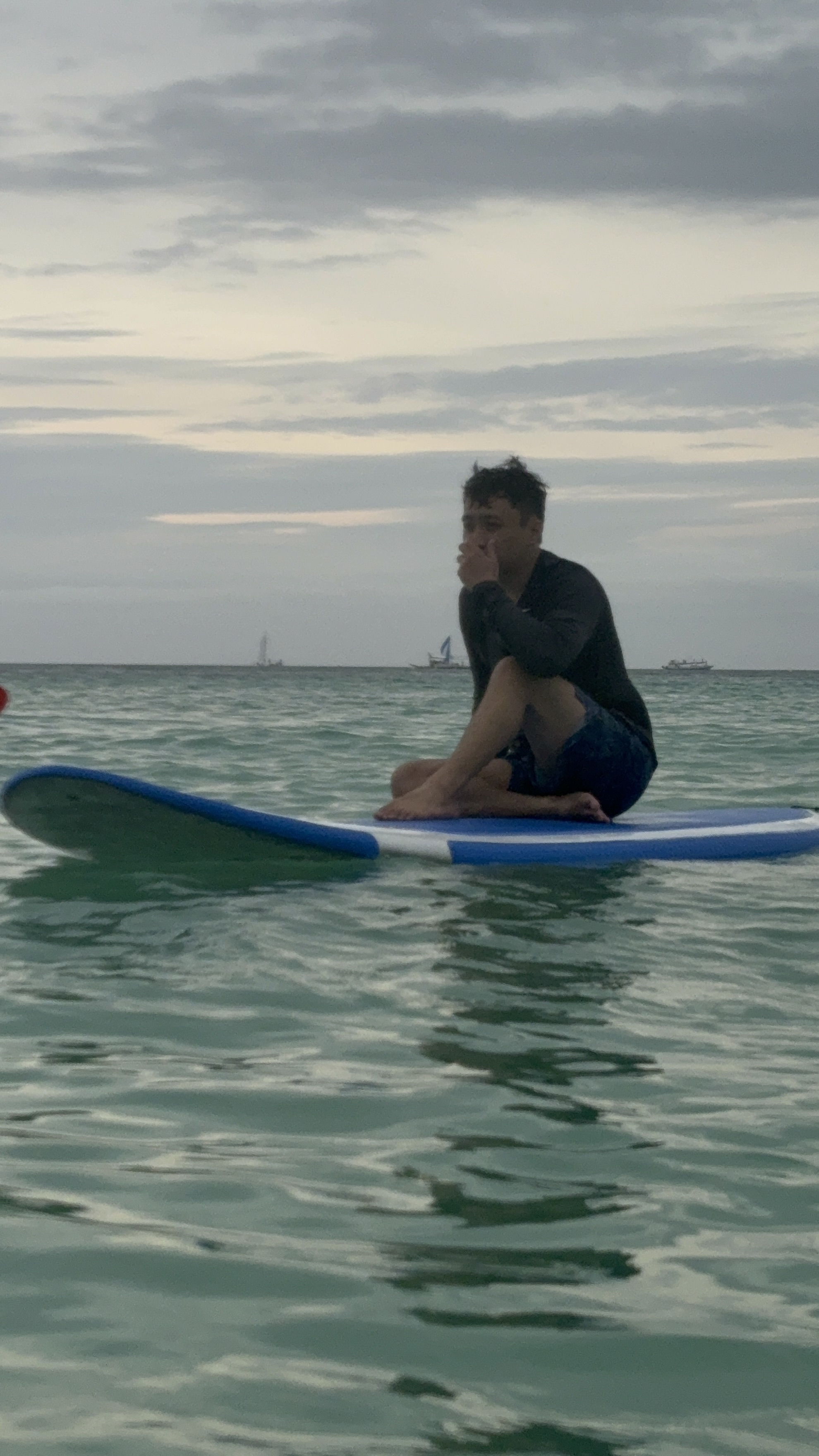
Dylan sitting quietly on a surfboard in the open ocean
From the Journal

Full Story Collection

View All Posts
Loading stories from the road...
What's Next?

You don't have to figure this out alone.

Whether you're just starting out or already somewhere between destinations, I'm happy to talk. No pitch. No program. Just a real conversation.